New Hearing Aids and a Program Making It Possible
For a while, Kat didn’t realize how much she was missing. One of her hearing aids had stopped working altogether. The other was barely functioning, but because her hearing had changed so gradually, she hadn’t noticed just how much she’d been compensating.
“I didn’t know either was not working 100% for my hearing,” she said.
Replacing them wasn’t simple. Kat relies on SSDI as her only source of income, and new hearing aids were simply out of reach.
For many people in her situation, that’s where the story ends: aging hearing aids that no longer meet their needs, or no hearing aids at all.
Instead, her audiologist, Dr. Cara Kreisman at Rainbow Audiology, told her about a hearing aid assistance program offered through Deaf and Hard of Hearing Services. Kat applied, and the response came quickly.
“I was immediately contacted by (D&HHS Hearing Assistive Technology Specialist) Carol Byrne. She sent me via email the paperwork needed. I filled out the forms quickly. She responded very quickly as well. I was ecstatic with the news that I was approved!”
The difference has been remarkable.
“Very impressed. My new ones are 100%, which I’ve noticed, unknowingly, I wasn’t hearing as well with the old ones,” she said.
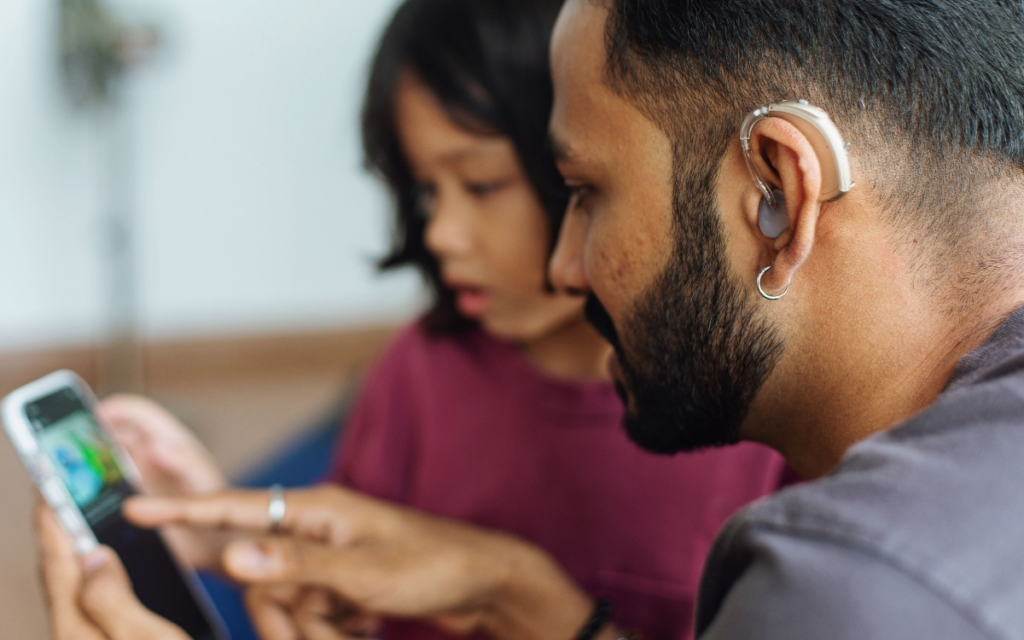
The new hearing aids have many of the same features as her previous pair, including a companion app. But what stands out most to Kat isn’t just the hearing aids themselves, but knowing she didn’t have to navigate the process alone.
“I am absolutely very grateful for this program,” she said simply. “I am glad this is available to us that need help like this. Truly thankful.”
She hopes more people will learn that help like this exists.
“Info about this program needs to be sent to individuals on SSI or SSDI to get help with hearing aids. Also, add more audiologists to share with their clients.”
Stories like Kat’s are exactly what D&HHS hoped to make possible when it received a $150,000 grant from Corewell Health’s Healthier Communities initiative. The two-year grant is expanding the organization’s hearing aid assistance program to serve low-income and underserved Kent County residents ages 0–59—a population that had long faced limited options for accessing hearing aids.
“So far, the Corewell Healthier Communities grant has helped us provide hearing aids to four individuals, each experiencing a meaningful impact in their daily lives,” said Carol Byrne. “What we’ve been able to provide reinforces the purpose of the grant and shows how important it is to reach even more people who have been waiting for this kind of support. Stories like Kat’s emphasize the importance of removing financial barriers so people can receive the hearing healthcare they need to feel confident, independent, and connected again.”
D&HHS has long helped low-income seniors obtain hearing aids, but for years, working-age adults and families with children had no comparable resource. Hearing aids can have unpredictable insurance coverage, with Medicare, Medicaid, and private insurance coverage often requiring supplemental plans and many with no coverage at all. For those with coverage, unaffordable copays still create barriers, especially for many of the 41 percent of Kent County households living below the ALICE threshold (Asset Limited, Income Constrained, Employed).
Over recent years more requests have come in from residents under 60 who needed hearing aids but had nowhere to turn. The Corewell Health grant made it possible to say yes.
Corewell Health’s Healthier Communities Multi-Year Grant is guided by the Kent County Community Health Needs Assessment, with funding focused on organizations advancing equity in areas such as access to care and mental health.
D&HHS’s proposal stood out because it identified a specific, often-overlooked gap: residents under 60 who don’t qualify for senior hearing aid programs and can’t afford the cost on their own.
“What made the proposal especially strong was how clearly they connected that need to real-world outcomes. They demonstrated how untreated hearing loss affects communication, education, employment, and overall health and how expanding access to hearing aids can make a meaningful difference,” said Tessa Kwant, Kent County Grant Making & CBISA Specialist for Healthier Communities at Corewell Health.
Kwant said the program reflects what equitable access to care looks like in practice by removing a concrete financial barrier to medically necessary support that insurance often doesn’t cover.
Over the two years of funding, Corewell will be looking for impact at both the individual and community levels: improved communication, reduced isolation, and stronger participation in healthcare, school, and work for the people D&HHS serves, along with broader lessons about what’s possible when cost barriers are removed.
“This investment reflects a broader commitment to equity: ensuring that cost, coverage gaps, or life stage don’t determine whether someone can access essential care,” Kwant said.
Hearing loss can affect nearly every part of life, but hearing aids help change that trajectory by making it easier to communicate with healthcare providers, participate fully at work and school, and stay connected with family, friends, and community.
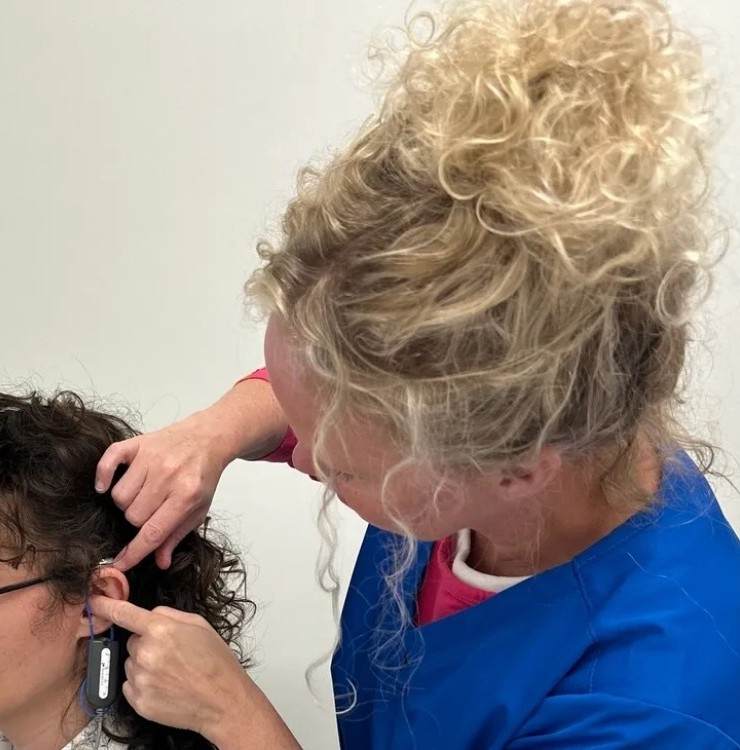
Eligible Kent County residents ages 0–59 whose household income is at or below 200 percent of the Federal Poverty Level are referred to D&HHS through audiologists, schools, healthcare providers, and community partners. Staff then work with local hearing health providers to help each client receive the hearing aids that best fit their needs.
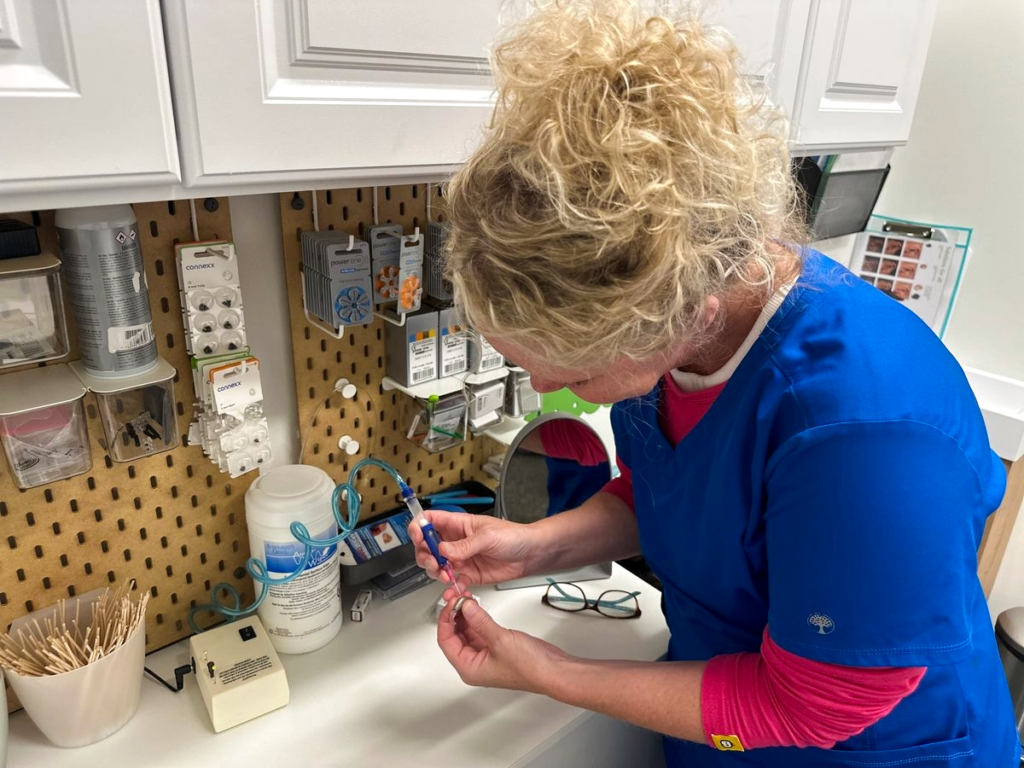
The relationship doesn’t end with the fitting. D&HHS follows up with clients in the months afterward to make sure their hearing aids are working well and to connect them with additional advocacy, navigation, or community resources as needed. The current grant-funded program runs through January 2028.
Deaf and Hard of Hearing Services is the only agency in West Michigan providing comprehensive, culturally competent services for Deaf, DeafBlind, and Hard of Hearing individuals. For nearly 30 years, D&HHS has provided ASL interpretation, sign language education, advocacy, and access to assistive technology, serving thousands of children, adults, and seniors across Kent County and 26 surrounding counties.
To learn more about the hearing aid program or to find out whether you or someone you know may qualify, visit https://deafhhs.org/hearing-assistive-technology/ or contact Carol Byrne at cbyrne@deafhhs.org or 616-732-7358 ext 107