Training with a Human Touch: DeafBlind Workshop Equips First Responders and Healthcare Providers
When Captain Cory Kernodle of the Grand Rapids Fire Department walked into Deaf and Hard of Hearing Services’ second annual DeafBlind Awareness Workshop, he was driven by one thing: respect.
“I have a passion for the patients we respond to,” said Kernodle, who oversees training for the department. “I want to make sure every patient is respected and that the fire service can better respond to their needs.”
He wasn’t alone.
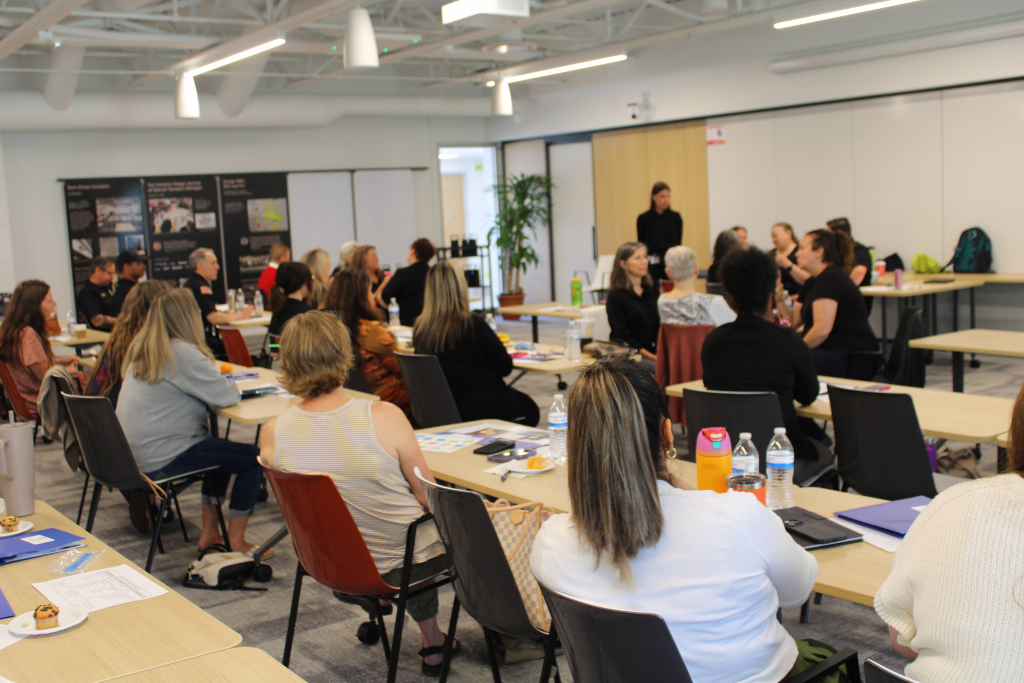
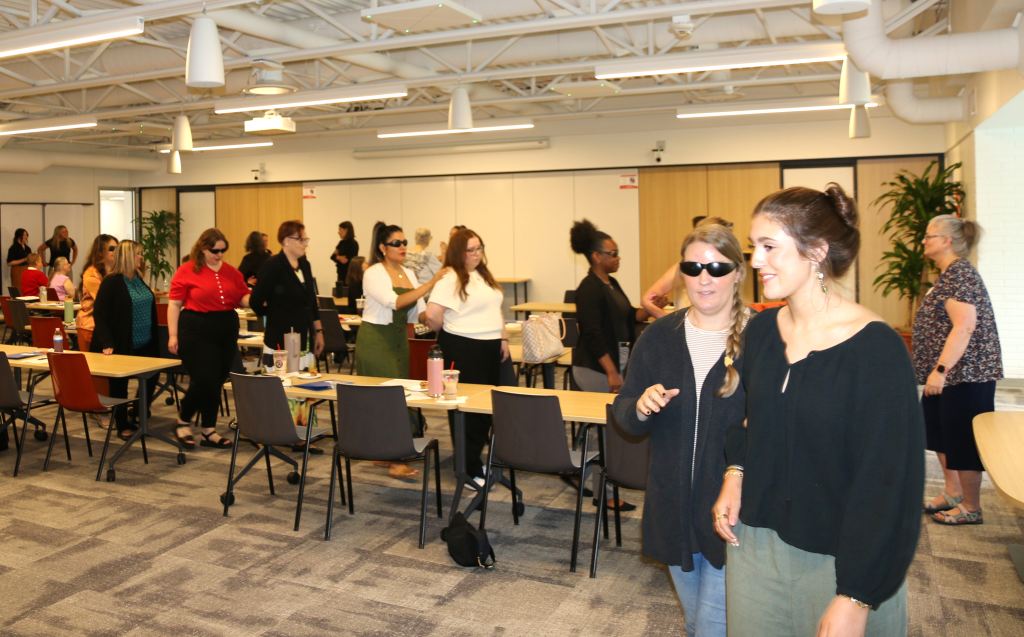
This year’s workshop, hosted at the D&HHS offices in Grand Rapids, drew 36 attendees from across the region. Paramedics, nurses, firefighters, EMS personnel, behavioral health professionals, transportation workers and public health staff came together to learn how to better serve DeafBlind individuals in emergency and healthcare settings.
The event, a collaboration between D&HHS and the Association for the Blind and Visually Impaired (ABVI), is part of DeafBlind Awareness Month and grew out of a shared commitment to address the inequities often faced by the DeafBlind community.
“Our agency works to educate and advocate, and that was at the heart of this event,” said Erica Chapin, Community & Partnerships Manager at D&HHS. “So many service providers are unaware of how to appropriately serve the DeafBlind community, and this workshop gives them an introduction—and opens the door for them to consider how they can ensure more accessible services.”
Participants spent the morning learning from DeafBlind presenter Isabell Florence and others, such as 2024 workshop leader Jill Gauss, who brought firsthand experience to the conversation. Topics ranged from communication strategies to guiding techniques and the importance of physical touch as a primary mode of information.
Florence, who has lived experience navigating a world not always designed for her, said she was honored to help guide attendees into new ways of thinking. “The DeafBlind community exists,” she said. “We are here. We’re part of the population that often gets left behind or overlooked. So when professionals take the time to learn about how to communicate with and support us, it makes a huge difference.”
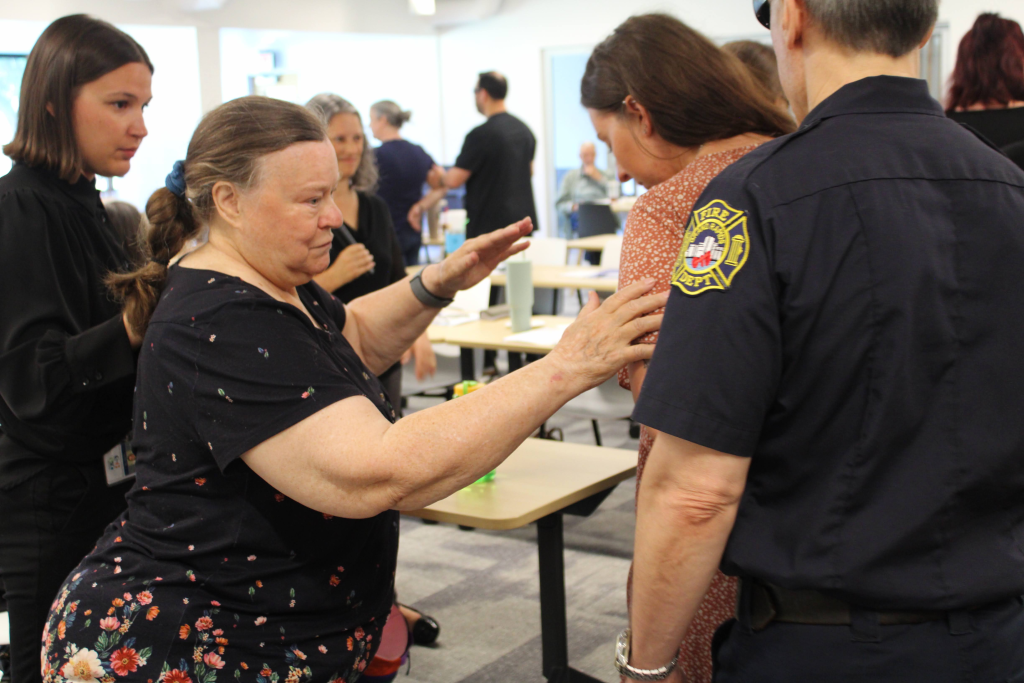
She emphasized that in emergency situations, trust and calmness are essential before any real communication can happen. “In a crisis, not only is there panic—just like in the hearing and sighted communities—but now we’re also adding a communication breakdown,” she said. “It’s important to comfort and calm the patient before attempting communication. DeafBlind people will find a way to communicate, but if they’re upset or unsure, first responders may miss vital information.”
Her advice to attendees was practical and powerful: “Identify yourself in a tactile way. Show us your badge, patch, helmet—anything that lets us know you’re there to help. Because if we don’t know you’re there to help, the other option is that you’re there to harm.”
Florence encouraged responders to use a calm or firm touch to begin building trust. “Once you identify who you are and that you’re there to help and listen, be patient and allow the DeafBlind person to tell their story. That kind of approach can open the line of communication and make everything go more smoothly.”
“I was surprised to realize that I may have overthought my ability to communicate with someone in the DeafBlind community,” said Kernodle. “What I learned is that with patience, communication is possible, even during emergencies.”
That insight is already shaping the department’s future. “The training staff will develop an hour-long class on basic communication and movement skills for the DeafBlind community,” he said. “Without attending the workshop, this class would not be possible.”
The impact extended beyond the fire department.
Miriam Andrade Cuevas, a Manager of Corporate Communication for Corewell Health, said equitable access is at the heart of her personal and professional mission. What she learned at the workshop, she added, broadened her perspective and deepened her understanding of the DeafBlind, two powerful outcomes she hoped would take place when she signed up for the event.
“The workshop reinforced my commitment to ensuring that every community member, across all identities and lived experiences, feels seen, heard and valued in every interaction,” she said.
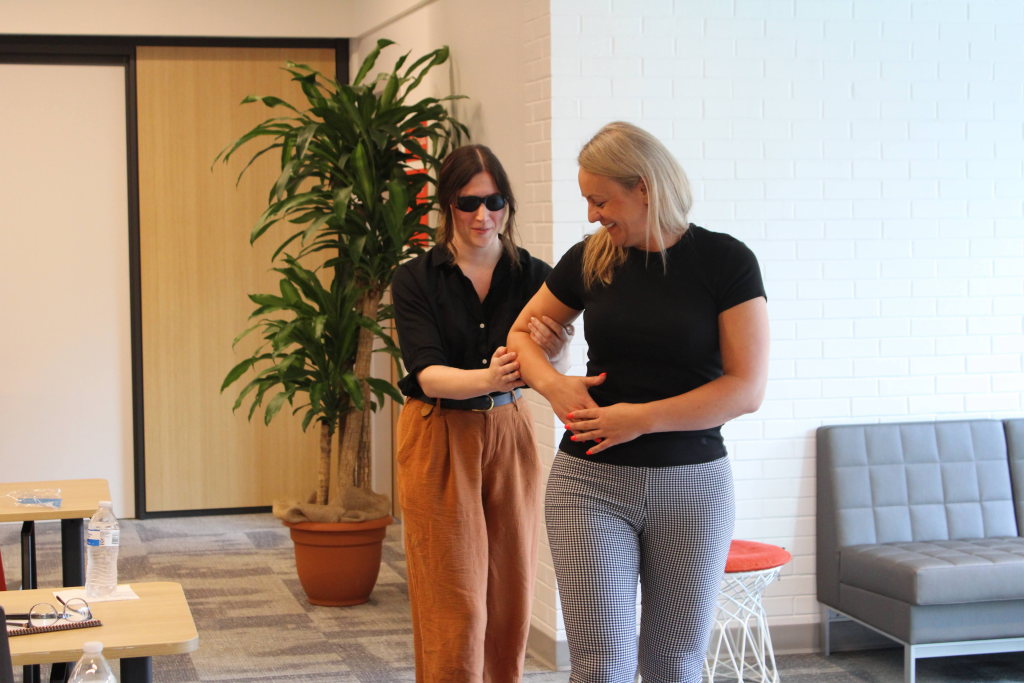
She noted that the walk-through simulation, where attendees wore special glasses to simulate blindness and were led through the room by a partner, was “incredibly powerful, offering an immersive experience that deepened my understanding and awareness.”
And she was moved by Florence’s response to her question about what entertainment is like for DeafBlind individuals, a reply she described as both generous and enlightening, a reply that included an anecdote about Florence’s growing up as the child of a professional guitar player who wanted her to experience music.
Whenever he played, he would sit me on a big speaker so I could feel the sound,” Florence told the spellbound attendees. “To this day, I remember the rhythms, I remember him. Dancing is the music of the body, and music is vibration. If you can feel it, you can enjoy it.”
For Florence, the workshop was about more than instruction. It also was about connection. “These aren’t just professionals learning new tools,” she said. “They’re people building bridges. And that’s what makes events like this powerful.”
She added that her hope was for attendees to take what was relevant to their roles and apply it immediately. “We’re willing to train one-on-one if more information or questions would better serve your staff,” she said. “Our community is here—we’re willing to help you help us.”
Liz Knopf, a paramedic from Life EMS, who also attended the workshop, agreed that the training filled an important gap in her knowledge.
“I had inexperience working with DeafBlind people and wanted to provide a better level of care and communication if I ever have a DeafBlind patient,” she said.
She was grateful for other insights the workshop provided.
“We’re trained to explain everything in detail to our patients,” she said. “But Isabell helped us see that DeafBlind individuals might not need or even want all of that. They want comfort, clarity and confidence. That requires a different kind of communication, and a lot of trust.”
For D&HHS, that trust-building is at the heart of their mission. And for the service providers in the room, the learning doesn’t end with a single workshop.
“Every interaction is an opportunity to create dignity and access,” said Chapin. “This event is one step, but it’s one that can ripple outward: through departments, systems and lives.”
Plans are already underway for next year’s workshop. But the work of building a more inclusive, responsive future? That’s happening now.
Thank You Event Sponsors